
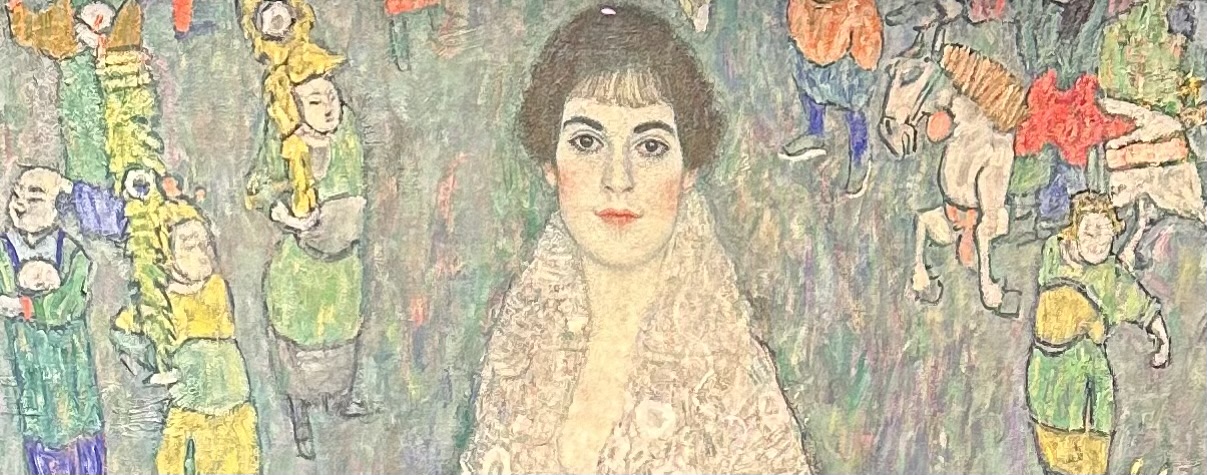
The sale week was a resounding triumph. There can be no question that the art market has returned to the kinds of highs we last saw in the mid-2010s. Record prices for Klimt, Kahlo, and Klein were matched by a solid performance in the middle market. Any lingering concerns about the state of the market have now been well and truly put to bed. The sums were dizzying: Sotheby’s achieved a total of $1.2 billion in sales over the week, while Christie’s fetched almost a billion dollars. Extraordinary indeed—and very much contrary to expectations from the art press.
Christie’s buyer breakdown was revealing: 58% US, 23% EMEA, and 19% APAC. The US remains the dominant force in acquisitions, and nothing I saw during the previews or in the overall positivity of the NYC trade suggested otherwise.
This November was a perfect storm: sellers eager to cash in and buyers keen to deploy stock market profits. The slow contraction of the London art market has led many European sellers to wait for the New York sales to offer their works. As a result, these auctions were chock-full of quality.
The main event of the week was the trio of Klimt paintings from the collection of the late Leonard Lauder. The works were exceptional, and the results were spectacular: $236 million for the portrait of Elisabeth Lederer—making it the most expensive Modern painting ever publicly sold. The two landscapes, both brilliant, achieved $68 million and $86 million respectively. Bidding for the Lederer portrait was fierce; opportunities like this come all too rarely. Klimt’s work is elegant, bright, and colorful, and this masterpiece was truly a once-in-a-lifetime opportunity for the eventual buyer—believed to be either Ken Griffin (on the phone with Julian Dawes) or a Saudi collector.
The sale as a whole (including two magnificent Matisse sculptures) totaled a mighty $527 million. Christie’s fought hard for the collection, but Sotheby’s prevailed with a bold, risk-heavy guarantee deal. Fortune favors the brave—and Sotheby’s risk-taking paid off handsomely with the 100% sold (“White Glove”) Pritzker sale, which included Van Gogh’s Piles de romans parisiens et roses dans un verre. Paintings of books from his Paris era have not historically been strong price-wise, but this large-format gem achieved $63 million—the highest price ever for an 1887 work of this type.
Frida Kahlo’s El Sueño (La Cama) was another showstopper, part of the Ertegun Sale (“Exquisite Corpse”), and realized $55 million—making it the most expensive painting by a female artist ever sold at auction. Kahlo’s standing transcends her art; she is a singular figure in women’s art history, with no direct link to any male artist. Without exaggeration, she is outstanding for being out-standing. Within that vaguely Surrealist oeuvre, no other female artist comes close.
Contemporary sales also delivered huge results, though perhaps the froth is coming off the market for top-end Black American artists, with Hendricks and Marshall both failing to sell at Sotheby’s—albeit at very ambitious estimates. That said, Noah Davis’s The Casting Calldoubled its already toppy $2 million estimate, and a fabulous Basquiat achieved $45 million, boasting all the motifs of his finest work—crowns, skulls, and scrappy blocks of color to the fore.
At Sotheby’s, the new Breuer building was interesting architecturally, but it is not suitable as a saleroom during the busy November and May weeks. Queues stretching from Madison Avenue back to Park are impractical, and a five-minute wait for the lift leaves a bad taste. Perhaps this will be a logistics lesson learned, but splitting the viewings—with some works at York Avenue—seemed odd.
Christie’s sales also underlined striking market confidence. With total sales reaching an extraordinary $964.5 million, this was Christie’s strongest performance in three years—an emphatic statement that blue-chip art remains a fortress of value. The numbers tell their own story: 90% sold by lot, 96% by value, and a staggering 108% above the low estimate. Conservative estimates encouraged competitive bidding—a different strategy from Sotheby’s model, but deeply rewarding nonetheless.
The headline act was Rothko’s No. 31 (Yellow Stripe), commanding $62.16 million and setting the tone for an evening where Monet, Picasso, and Hockney all cleared the $40 million mark. These prices were expected, yes, but they also reflect a flight to the blue-chip and the very best. Including the Rothko, the Weis Collection contributed $218 million and underscored the power of provenance. Meanwhile, the 21st Century sale demonstrated contemporary resilience, with Christopher Wool’s Untitled (RIOT) leading at $19.84 million. Fifteen artist records fell—from Beauford Delaney to Firelei Báez—a clear signal that collectors are embracing diversity and rediscovery.
Overall, including a few strong results at Bonhams (a 1938 Tanguy in particular that made $1.7 million and was my personal highlight of the week!) and Phillips, the week was a triumph and gave the trade a real buzz about the Miami fairs and the year ahead. It should be a cracker!
As ever, please use a trusted advisor when spending significant sums—and if we can help, don’t hesitate to reach out. Wishing you a very happy festive season and a terrific 2026!